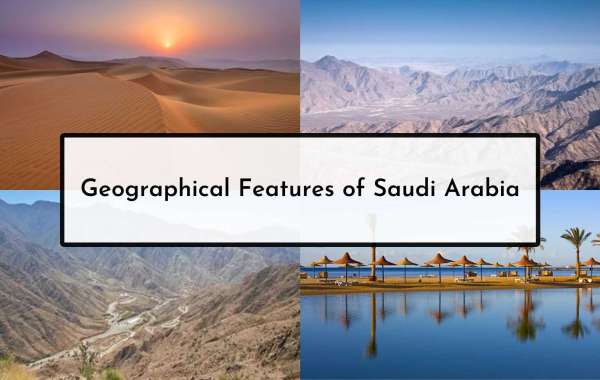

We know that every country has vast deserts, high mountains, and beautiful beaches. These things are the natural features of this country. Similarly, Saudi Arabia also has various mountain ranges, huge deserts, and breathtaking beaches. Millions of tourists visit this kingdom each year to explore its diversity in several aspects of life. For more information, consider the complete explanation in this article: “Geographical Features of Saudi Arabia.”
The majority of the Arabian Peninsula is occupied by Saudi Arabia, a country in the Middle East. It is the largest country in the region, covering an area of over 2.1 million square kilometres. The country is home to the two holiest mosques in Islam, Masjid al-Haram and Masjid al-Nabawi. People can visit these two mosques to complete their religious duties by booking Umrah Packages.
Saudi Arabia – Geographical Features
Saudi Arabia is a unique and fascinating destination for tourists and nature lovers due to its broad range of geographical features. These natural features include huge deserts and high mountains. The list of the Saudi Kingdom’s geographical features is as follows:
- Rub al-Khali
- Hejaz Mountains
- Asir Mountains
- Coastal regions
Rub al-Khali
One of the most striking features of Saudi Arabia is its vast desert landscape. The Rub al-Khali, also known as the Empty Quarter, is one of the largest sand deserts in the world. This desert covers an area of over 650,000 square kilometres. The desert is home to rolling dunes that stretch as far as the eye can see. In this region, the temperatures can soar to over 50 degrees Celsius during the day. Despite its harsh conditions, the Rub al-Khali is home to a variety of wildlife, including Arabian Oryx and sand cats. The desert also has several oases, such as the Al-Ahsa Oasis. This oasis is a UNESCO World Heritage Site and one of the largest oases in the world.
Hejaz Mountains
Saudi Arabia’s other prominent natural feature is the Hejaz Mountains, which run parallel to the western coast of the country. The mountain range extends over 800 kilometres and is home to several peaks, including the famous Mount Uhud. This mountain played a significant role in Islamic history. The Hejaz Mountains are also home to several important cities, such as Taif and Jeddah. Taif is well-known for its beautiful gardens and mild climate. While Jeddah is a bustling port city and commercial hub.
Asir Mountains
In the south of Saudi Arabia lies the Asir Mountains, which form part of the Sarawat range. The mountains are characterized by their cliffs and rocky terrain, and they rise to over 3,000 meters in some places. The Asir Mountains are home to a unique ecosystem, with several species of plants and animals that are found nowhere else in the world. The area is also known for its traditional architecture, with many of the buildings constructed using local stone and wood.
Coastal regions
Saudi Arabia is also home to several coastal regions, including the Red Sea coast and the Persian Gulf coast. The Red Sea coast is very famous for its coral reefs and clear waters. Therefore, this coast is a popular destination for scuba diving and snorkelling. The Persian Gulf coast is home to several important cities, including Dammam and Jubail. These cities are centres of the country's oil and gas industry. The coast is also home to several important wildlife habitats, such as the Jubail Marine Wildlife Sanctuary. This breathtaking location is home to a variety of marine animals, including dolphins, dugongs, and sea turtles.
The relationship between geography, culture, and history of Saudi Arabia
The country's geography has also played a significant role in shaping its history and culture. The harsh desert environment has led to the development of a strong sense of community and self-reliance among the people. The Saudi people are very famous throughout the world for their hospitality and generosity. The mountains and coastlines have also played a role in the development of traditional industries, such as fishing and agriculture. The geographical features have influenced the architecture and design of buildings and cities.
Conclusion
In conclusion, Saudi Arabia is a country of great geographical diversity, with vast deserts, high mountains, and beautiful coastlines. Its unique landscapes have shaped its history, culture, and way of life, and continue to attract visitors and researchers worldwide. Tourists can explore the vast dunes of the Rub al-Khali, and trek through the mountains of the Hejaz or Asir ranges. Additionally, they can discover the rich marine life of the Red Sea and Persian Gulf coasts. People can also explore different summer adventures in Saudi Arabia after completing the pilgrimage by booking August Umrah Packages.