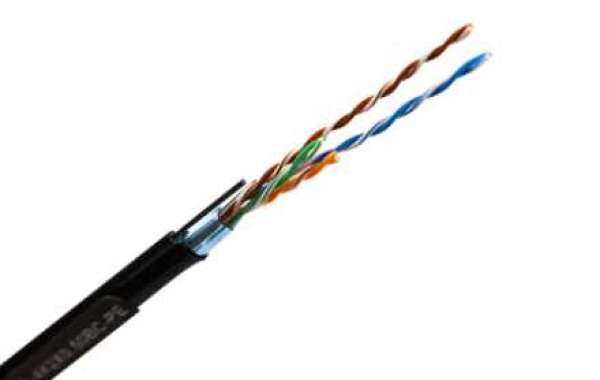

Cat6a vs Cat7, how to choose?
In fact, the Cat7 standard was approved earlier than Cat6a to support 10Gbps over 100 m. One of the main advantages of Cat7 cable is that it has a shielding layer for each of the four pairs of wires and the four pairs of wires, so that it has better noise resistance, but the flexibility and manageability are also poor. Therefore, 10GbE on Cat7 cables is more difficult to install than Cat6a cables, and Cat7 cables are much more expensive.
In the laboratory, Cat7 cable speeds have shown the potential to reach data rates of 40Gbps, 50Gbps, and 100Gbps. But the Cat7 cable itself only provides the power and speed of the equipment and Internet type it uses. When you only switch to a faster cable but continue to use a slower device, the Internet speed will not increase. In other words, if you use a 10GBASE-T copper switch to connect to your 10G server, no matter whether you replace Cat6a with Cat7, you can only get 10G at most.
10GbE cabling via Ca7
10GbE over Cat7 cable
UTP Cat7 Patch Cord Cable's Cat7 connector type is slightly different from the previous two-RJ45 compatible GG45 connector. Although Cat7 cables can also use RJ45 connectors, it is easier to terminate cables with thick sheaths to narrow jacks in the field. Therefore, you may need to hire a professional electrician or spend a long time terminating the RJ45 jack to the Cat7 cable yourself.
So, Cat7 or Cat6a, which one should I choose? Most people think that Cat7 provides much more bandwidth than they need, so choose Cat6a or Cat6. However, as more and more households add additional technologies to their Ethernet cables, such as automation, closed-circuit security devices and personal servers, and smart home technologies, Cat7 may be more suitable. For this reason, those who anticipate increased bandwidth usage may choose the faster cable Cat7, while those who do not update their technology frequently may choose Cat6a, which is completely sufficient.