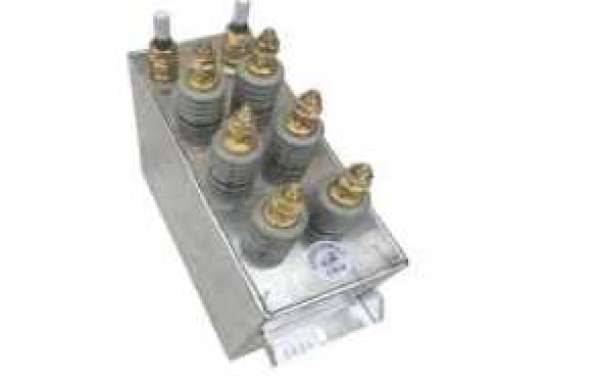

Are you tired of your electronic devices overheating and slowing down? Look no further because we have the perfect solution for you – water cooled capacitors! In this blog post, we will dive into the world of efficient heat dissipation with these innovative components. Say goodbye to sluggish performance and hello to a cool and top-performing device. Get ready to be amazed by the power of water in keeping your electronics running smoothly. Let's jump right in!
Introduction to Water Cooled Capacitors
Water cooled capacitors are an efficient way to dissipate heat. They are made with a dielectric material that is resistant to high temperatures and has a high thermal conductivity. This makes them ideal for use in applications where high power dissipation is required. Water cooled capacitors are also used in applications where space is limited and/or air cooled capacitors would not be able to adequately dissipate the heat.

Benefits of Using Water Cooled Capacitors
Water cooled capacitors are highly efficient at dissipating heat, making them ideal for use in high-power applications. When used in conjunction with a cooling system, water cooled capacitors can significantly improve the thermal performance of an electrical system.
Water cooled capacitors are able to operate at higher temperatures than air cooled capacitors, making them ideal for use in high-power applications. Water cooled capacitors also have a lower risk of failure than air cooled capacitors, making them a more reliable option.
In addition to their improved thermal performance and reliability, water cooled capacitors also have a number of other benefits. Water cooled capacitors are less likely to be damaged by shock and vibration than air cooled capacitors, making them ideal for use in industrial and commercial applications. Water cooled capacitors also have a longer lifespan than air cooled capacitors, meaning they will provide years of trouble-free operation.
How Does Water Cooling Work?
Water cooling is a process of transferring heat from one area to another by using water as the medium. The water is usually cooled by an external source, such as a fan or a radiator. The cooled water is then circulated back to the area where it will absorb more heat.
Water cooling is an efficient way to transfer heat because water has a high specific heat capacity. This means that it can take in a lot of heat before its temperature begins to rise. Water is also a good conductor of heat, so it can quickly carry the heat away from the area where it is being generated.
One advantage of water cooling over air cooling is that it enables smaller and lighter component designs. Air coolers require larger fins and heatsinks to dissipate the same amount of heat, which increases weight and size. Water cooling also eliminates the issue of dust buildup on components, which can happen with air coolers.
Another advantage of water cooling is that it can be used to cool multiple components at the same time. Air coolers typically only cool one component at a time, which can lead to uneven temperatures and hot spots within the system. By using water cooling, all components can be kept at uniform temperatures for optimal performance.

Types of Water Cooled Capacitors
There are three types of water cooled capacitors: surface-mount, internal, and external. Surface-mount water cooled capacitors are the most efficient type of capacitor, as they have a larger surface area for heat to dissipate. Internal water cooled capacitors are less efficient, as they are surrounded by other components and have less surface area for heat to dissipate. External water cooled capacitors are the least efficient type of capacitor, as they are not in direct contact with the cooling water and have even less surface area for heat to dissipate.
Applications for Water Cooled Capacitors
Water cooled capacitors are used in a variety of industries and applications where efficient heat dissipation is critical. These capacitors are commonly used in high power applications such as electric motors, generators, and welding equipment. They are also used in power supplies, UPS systems, and other industrial equipment.
Water cooled capacitors offer several advantages over air cooled capacitors. First, they have a much higher heat capacity which allows them to dissipate heat more efficiently. Second, they are not affected by air movement so they can be used in environments where there is little or no airflow. Third, they are less likely to fail due to thermal stress since the water circulated around the capacitor keeps it cooler than the surrounding air temperature.
There are a few things to keep in mind when using water cooled capacitors. First, it is important to use distilled water or deionized water to avoid corrosion of the capacitor components. Second, the water should be circulated at a rate that will maintain the desired temperature of the capacitor within its specified operating range. The cooling system should be sized appropriately for the application to ensure proper operation and longevity of the capacitor.

Tips for Efficient Heat Dissipation with Water Cooled Capacitors
Water cooled capacitors are an efficient way to dissipate heat. By circulating water around the capacitor, the heat is quickly removed from the capacitor and dissipated into the surrounding air. This allows for a more efficient cooling of the capacitor, which results in a longer lifespan and higher performance. Here are some tips for how to efficiently cool your capacitor with water:
- Make sure that the water you are using is clean and free of impurities. The last thing you want is for your capacitor to be contaminated by dirty water.
- Circulate the water around the capacitor at a moderate rate. You don't want to circulate the water too quickly, as this can cause turbulence and reduce the effectiveness of the cooling.
- Use a high quality pump to circulate the water. A cheap or poorly made pump will not only be less effective, but it can also break down over time and contaminate your system.
Conclusion
Water cooled capacitors are an efficient way to dissipate heat and provide a high level of performance. This type of cooling system can be used in a variety of applications, from industrial processes to power supplies. With its low cost, easy installation, and reliable operation, water cooled capacitors offer many advantages. As technology continues to develop and improve efficiency becomes increasingly important for electrical systems designers should seriously consider the use of water cooled capacitors as part of their design process.
Sunray Link is a brand of Sunraylink New Energy Technology Co., Ltd. Its products are mainly used in DC-Link, IGBT absorption protection, high-voltage resonance, coupling and AC filtering applications.
If you want to know more about film capacitors,welcome to contatc us.liv@sunraylink.com