SUMMARY

It was demonstrated that the anaerobic chamber did not offer any advantages over bench regimens when primary anaerobic plates were allowed to incubate for forty-eight hours prior to being examined. This was done in order to demonstrate the conclusion.
This article presents the findings of a comparative study of three different culture regimens used for the anaerobic culture of clinical specimens submitted for bacteriological investigation. These culture regimens include: (i) the routine bench technique in current use in this laboratory; (ii) a 48-hour primary plating regimen; and (iii) an anaerobic chamber of the flexible type as described by Aranki et al. In the study, the researchers compared the effectiveness of these three
MATERIALS AND METHODS
specimens, in addition to travel and logistics
1. Patients who had peritonitis (6), empyema (5), various abdominal abscesses (10) and superficial abscesses (3) all provided specimens for culture that were either fluid pus or swabs of purulent material
2. Pus samples were obtained from patients in the operating room, placed in sterile MacCartney's bottles, and then transported to the laboratory for analysis as soon as possible
3. Immediately after taking the swabs, the purulent material was placed in tubes that were both long and narrow and had caps that screwed on
4. According to Cary and Blair's research from 1964, these tubes contained a pre-reduced Cary and Blair transport medium column that was at least 8 centimeters in height
5. The medium's concentration was kept constant at 5% throughout the experiment
6. Ltd
7. , Kingston-upon-Thames, Surrey) at 0
8. 1The Southern Group Laboratories in Lewisham, London, provided us with a complete medium for our experiments that consisted of glucose-cooked-meat broth
9. We used this medium in our research
10. At final concentrations of 5 pg per ml for the menadione and 0
11. 1 mM for the sodium bicarbonate, Hopkin and Williams' menadione and sodium bicarbonate were added to Southern Group Laboratories' Brewer's Thioglycollate Medium
12. The research on carbohydrate fermentation was built on Holdeman and Moore's (1972) medium, which served as the basis for the work
Tween 80, which is manufactured by Sigma Chemical Co., was added to the mixture when that medium was used for research on the fermentation of anaerobic gram-positive cocci. The study was conducted by adding Tween 80 to the mixture. The carbohydrates that Holdeman and Moore (1972) listed as being present in each specific genus were the ones that were used in the fermentation studies. Holdeman and Moore's research was published in the journal Microbiology. The Indole Nitrite Broth was created by following the instructions supplied by the manufacturer, Beckton-Dickinson Ltd, which is located in Wembley, Middlesex. These instructions called for a dehydrated product that is available for purchase in the market.
As soon as the specimen was brought into the laboratory, the material that was going to be cultured was moved into the anaerobic chamber, and a portion of the sample was processed using the chamber regimen. After the specimen had been cultured utilizing all three methods, a direct smear was prepared from the material and stained utilizing Gram's method in order to determine the number of morphological types that were present as well as their relative abundance. This was done in order to ascertain whether or not the specimen contained any pathogens. After plating, the blood-agar and kanamycin-brucella-agar plates were placed inside a steel anaerobic jar (Stuart Scientific Co., Croydon, Surrey), and the jar was closed and tightened while it was still contained within the chamber. This was done so that the jar would not release oxygen into the chamber. The temperature in each jar was brought up to 37 degrees Celsius in the incubator, and all subsequent readings of the plates were performed within the room. Before beginning the chamber regimen, all of the media that was required for the procedure was stored inside the chamber for a period of forty-eight hours. This was done in preparation for the chamber regimen.
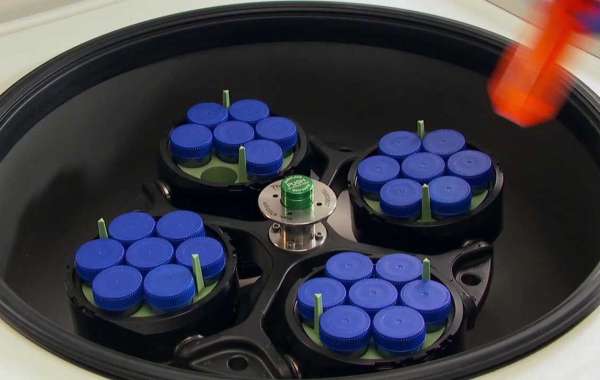
When high speed centrifuge came time to sterilize the loops and straight wires, they were placed inside of a small micro-incinerator that was built from a small electrical fire bar that was connected to a variable transformer (while the operator was protected by the appropriate safety precautions).
The capability of the chamber atmosphere to support the growth of the Clostridium tetani strain NCTC9569 was evaluated by streaking the bacterium on blood agar and incubating laboratory centrifuge in an anaerobic jar that contained the chamber atmosphere but did not contain a catalyst. This was done in order to determine whether or not the chamber atmosphere could support the growth of the bacterium. This was done in order to keep an eye on the condition of the air inside the chamber.
Conventional exercises performed on the bench
The primary plating procedure, which takes forty-eight hours to complete.
The investigation into the plates
At the end of the first day, the aerobic plates were read, and at this point, organisms were collected and identified. The plates contained in the anaerobic chamber were read at regular daily intervals while the organisms that appeared on the plates were sampled and identified as they did so. After 48 hours and again after 72 hours, the plates that were going to be used in the 48-hour protocol were read. The final readings were taken after the anaerobic incubation was allowed to continue for a total of two more days. During the course of the examination of the plate media, the organisms that were found to be present in the two bench routines were isolating and identifying themselves as they were coming to light during the process.
Colonies of bacteria that were thought to be anaerobic were tested to determine the atmosphere in which they thrived by plating a single colony on two different plates made of brucella blood agar and incubating one of the plates anaerobically while the other plate was incubated in an atmosphere containing air and 10% carbon dioxide. The results of the test showed that the bacteria colonies thrived in an atmosphere containing air and 10% carbon dioxide. After a period of forty-eight hours of incubation, the anaerobic techniques that are detailed further down were used to identify organisms that could only be found growing on the anaerobic plate. We were able to determine the identities of Bacteroides fragilis, B. melaninogenicus, and B. nucleatum by combining the use of these patterns with the results of a number of other uncomplicated biochemical tests that were listed by these researchers. Bacteroides sp. E. L. Ltd, Watson Microscope Division, Barnet, Herts) was the name given to Gram-negative anaerobic bacilli that did not fit into any of the aforementioned defined species. This division of Watson Microscope was located in Barnet, Herts.
Gram-negative cocci can be identified using biochemical characteristics (Holdeman and Moore, 1972), morphology under phase-contrast microscopy, and the catalase test performed on 48-hour cultures on egg-yolk agar (1975).
RESULTS
After performing all of the procedures, a total of 89 anaerobes (table I) and 16 facultative and microaerophilic bacteria were cultured from the 25 samples that were provided.